Why We Romanticize the Old Internet So Much

By Kate Willis on May 17, 2026
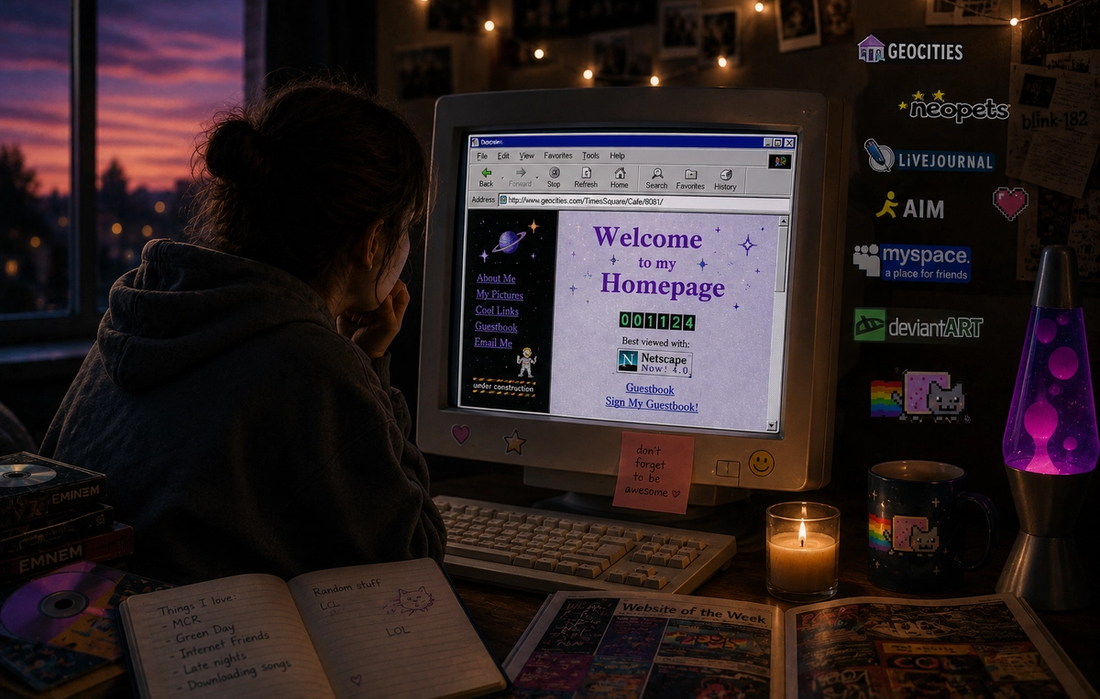
Ask almost anyone who spent time online in the early 2000s about the old internet, and the reaction is usually emotional.
People talk about it like remembering a childhood neighborhood that no longer exists. They miss the weird websites, chaotic forums, awkward blogs, niche communities, pixelated graphics, and the strange excitement of discovering random corners of the web late at night.
Objectively, the old internet was slower, uglier, and far less convenient than today’s version. Yet many people still feel nostalgic for it.
The question is why.
Key Takeaways
- Many people remember the early internet as more personal and creative
- Modern platforms became more commercialized and algorithm-driven
- Older online spaces often felt smaller and more community-focused
- Nostalgia plays a major emotional role in how people remember technology
- The internet changed from an exploratory space into a highly optimized one
The Early Internet Felt More Human
One reason people romanticize the old internet is because it felt less polished.
Websites were often homemade, messy, and deeply personal. Forums, fan pages, blogs, and niche communities reflected the personalities of the people creating them rather than carefully optimized branding strategies.
The internet felt like a collection of individuals instead of giant platforms competing for attention.
You could stumble across strange websites built purely because someone cared passionately about a topic. There was less pressure to monetize everything or chase viral engagement.
That unpredictability made the web feel more alive.
Discovery Used to Feel More Exciting
The early internet often felt like exploration.
People found new websites through random links, forums, blogrolls, and search engines rather than algorithmic recommendation systems. Browsing online sometimes felt like wandering through hidden digital neighborhoods.
Today, discovery is heavily controlled by algorithms.
Platforms now predict what users want to see and continuously feed them optimized content. While convenient, this also makes the internet feel smaller and more repetitive.
The old web felt bigger partly because it was harder to navigate.
Social Media Changed Online Culture Completely
One of the biggest reasons people miss the old internet is because social media transformed how people behave online.
Earlier online spaces were often anonymous or semi-anonymous. People interacted through usernames, forums, and communities built around shared interests rather than personal branding.
Modern platforms shifted attention toward visibility, metrics, and performance.
Likes, followers, engagement numbers, and viral content changed how users present themselves online. Many people now feel pressure to appear successful, entertaining, or constantly active.
The internet became less about expression and more about optimization.
The Internet Became More Corporate
The modern web is dominated by a small number of massive platforms.
Instead of thousands of independent websites, much of online activity now happens inside apps owned by giant tech companies:
- TikTok
- YouTube
- X
These platforms are designed carefully to maximize engagement and advertising revenue.
As a result, much of the internet feels standardized. Content is shaped by algorithms, trends, and platform rules rather than individual creativity.
The old internet felt more decentralized and less controlled.
Nostalgia Changes How People Remember Technology
Of course, part of this nostalgia is emotional rather than purely factual.
People often associate the old internet with earlier stages of life:
- Childhood
- Teen years
- First friendships online
- Early gaming experiences
- Discovering new music or hobbies
Those memories become tied to the technology itself.
In reality, the old internet also had major problems:
- Slower speeds
- Poor security
- Cluttered websites
- More technical barriers
- Limited accessibility
But nostalgia tends to soften flaws and amplify emotional connection.
People are often remembering how the internet felt rather than how it objectively functioned.
Online Spaces Used to Feel Smaller
Earlier internet communities were often more niche and intimate.
Forums and small websites created stronger shared identities because users returned regularly and recognized one another over time. Conversations moved slower, and communities felt more stable.
Modern platforms operate at enormous scale.
Posts disappear quickly into endless feeds, and interactions often feel temporary or performative. The internet became louder, faster, and more crowded.
For many people, that shift created emotional exhaustion.
The Modern Internet Feels More Addictive
Many older online spaces were designed around hobbies, discussion, and exploration.
Modern apps are often designed around engagement maximization.
Infinite scrolling, autoplay videos, notifications, and algorithmic feeds continuously compete for attention. The goal is often to keep users online as long as possible.
As a result, many people now feel drained by the internet instead of excited by it.
That emotional difference plays a huge role in why older online experiences feel more comforting in retrospect.
The Internet Grew Up — and So Did Its Users
Part of what people miss is not only the old internet itself, but the feeling of discovering something new.
The early web felt experimental because everything online still seemed full of possibility. There was a sense that anyone could create something strange, personal, or meaningful.
Today’s internet feels more mature, commercialized, and optimized.
In some ways, the web lost part of its innocence as it became central to global business, politics, entertainment, and culture.
People Still Want the Internet to Feel Personal
The nostalgia surrounding the old internet reveals something important: people still crave individuality, creativity, and genuine connection online.
That is why smaller communities, newsletters, personal websites, niche forums, and independent creators are slowly becoming attractive again.
Even in a highly algorithmic digital world, many users still miss the feeling of stumbling across something unexpected made by a real person rather than optimized for maximum engagement.
The old internet may never fully return, but the desire behind that nostalgia has never really disappeared.