
5 Wearable Gadgets That Were Way Ahead of Their Time

By Kate Willis on May 17, 2026
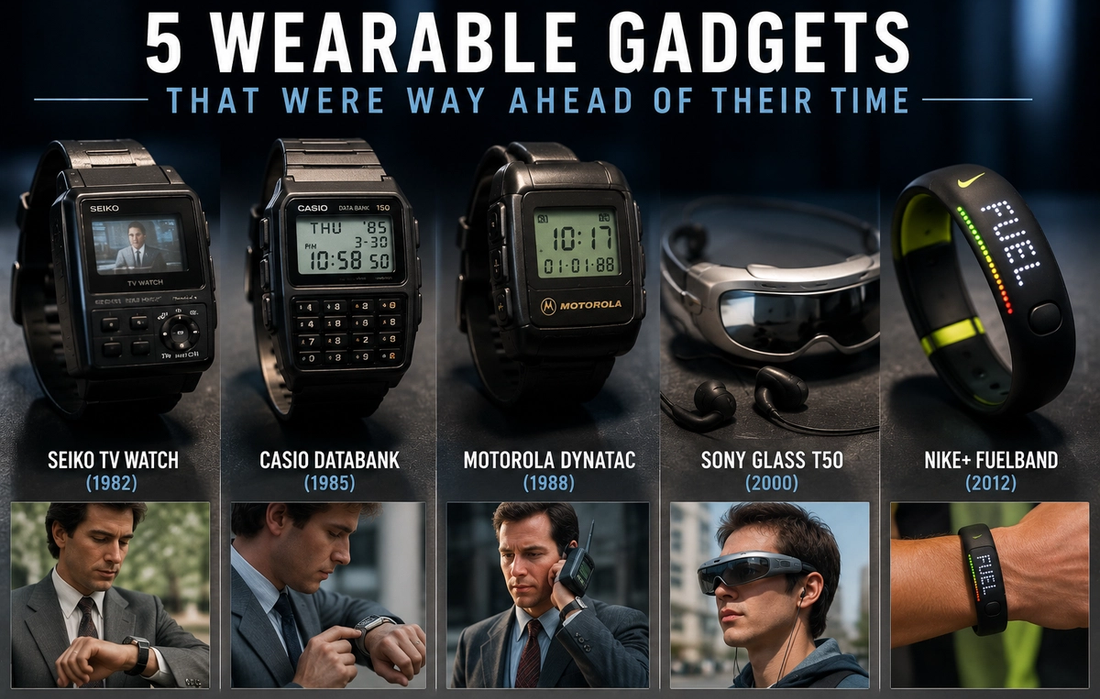
Wearable technology feels incredibly modern today. Smartwatches track heart rates, wireless earbuds respond to voice commands, and fitness bands monitor sleep and movement around the clock.
But many wearable gadgets tried to predict this future long before people were ready for it.
Some of these devices looked strange. Others failed commercially. A few were simply too ambitious for the technology available at the time. Yet looking back now, many early wearables seem surprisingly visionary.
They were trying to build the future years before the world fully understood what that future would look like.
Key Takeaways
- Wearable technology existed long before modern smartwatches
- Many early wearables introduced ideas now considered normal
- Some gadgets failed because technology was not advanced enough yet
- Wearables often struggled with battery life, size, and practicality
- Several forgotten devices helped shape modern consumer tech
1. The Sony Walkman
The Sony Walkman may not seem like a wearable by today’s standards, but it fundamentally changed portable personal technology.
Released in 1979, the Walkman allowed people to carry music with them everywhere using lightweight headphones and cassette tapes.
Before the Walkman, music was usually shared through radios or home stereos. Suddenly, entertainment became private, mobile, and deeply personal.
The idea of carrying a personalized audio experience throughout daily life paved the way for:
- MP3 players
- Wireless earbuds
- Streaming apps
- Modern wearable audio devices
The Walkman quietly introduced the concept of wearable tech culture long before the term existed.
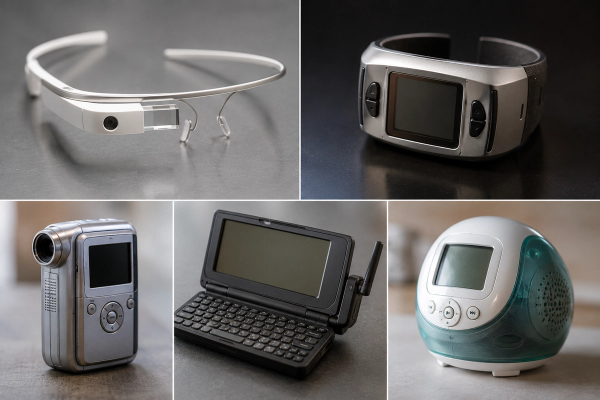
2. Google Glass
Few wearable gadgets generated as much hype — or backlash — as Google Glass.
Released in the early 2010s, the futuristic smart glasses displayed notifications, navigation, photos, and internet information directly in front of the user’s eyes.
At the time, the concept felt revolutionary.
But the device struggled because:
- Battery life was limited
- The design looked awkward
- Privacy concerns exploded
- Society was not ready for constant face-mounted cameras
People wearing Google Glass quickly became symbols of overly intrusive tech culture.
Yet many of its ideas now appear in modern augmented reality projects from companies still pursuing smart glasses today.
3. The Pebble Smartwatch
Before the Apple Watch dominated wearable tech, the Pebble smartwatch quietly built a passionate fanbase.
Launched through Kickstarter in 2012, Pebble focused on simplicity rather than flashy design. The watch displayed notifications, fitness tracking, and basic apps while offering surprisingly long battery life.
At a time when smartwatches still felt experimental, Pebble proved people genuinely wanted wearable digital companions.
Many features now standard in smartwatches were already present:
- Notifications
- Health tracking
- App ecosystems
- Custom watch faces
Pebble eventually disappeared, but it helped push wearable technology into the mainstream.
4. Bluetooth Headsets
Early Bluetooth earpieces once looked incredibly futuristic.
In the 2000s, tiny wireless headsets became symbols of hands-free communication. While many people mocked their awkward appearance, the technology itself was surprisingly important.
Bluetooth headsets normalized:
- Wireless audio
- Voice-controlled communication
- Always-connected wearable devices
At the time, walking around while talking seemingly to yourself looked strange. Today, wireless earbuds are completely ordinary.
Modern devices like AirPods owe a surprising amount to those early Bluetooth accessories.
5. Fitbit Fitness Trackers
When Fitbit launched its early fitness trackers, many people questioned whether anyone truly wanted to count daily steps or monitor sleep patterns.
Now wearable health tracking became one of the biggest technology markets in the world.
Fitbit helped normalize the idea that wearable devices could continuously measure:
- Movement
- Exercise
- Heart rate
- Sleep quality
- Calories burned
The company transformed health data into something interactive and personal, influencing nearly every smartwatch and fitness wearable that followed.
Many Early Wearables Failed for the Same Reason
One reason older wearables struggled is that technology simply was not ready yet.
Earlier devices often faced problems like:
- Weak batteries
- Bulky hardware
- Slow processors
- Limited internet connectivity
- High prices
Some ideas were genuinely innovative but arrived years before supporting technology became practical enough for mainstream users.
Timing matters as much as innovation.
Wearables Changed How People Interact With Technology
Traditional computers required people to sit down and actively use them.
Wearable gadgets changed that relationship completely.
Technology became:
- Portable
- Constantly accessible
- More personal
- More integrated into daily life
Instead of interacting with devices occasionally, people began carrying digital systems with them continuously throughout the day.
That shift fundamentally changed modern behavior.
The Future of Wearables Is Still Growing
Wearable technology continues evolving rapidly.
Smart glasses, AI-powered assistants, health-monitoring devices, biometric sensors, and augmented reality systems are all becoming more advanced every year.
Many ideas that once sounded unrealistic are slowly becoming normal.
Looking back, some forgotten wearables now seem less like failed gadgets and more like early prototypes for the connected world people live in today.
They may have arrived too early — but they still helped shape the future anyway.