
5 Gadgets That Promised to Change Everything (But Didn’t)

By Kate Willis on May 17, 2026
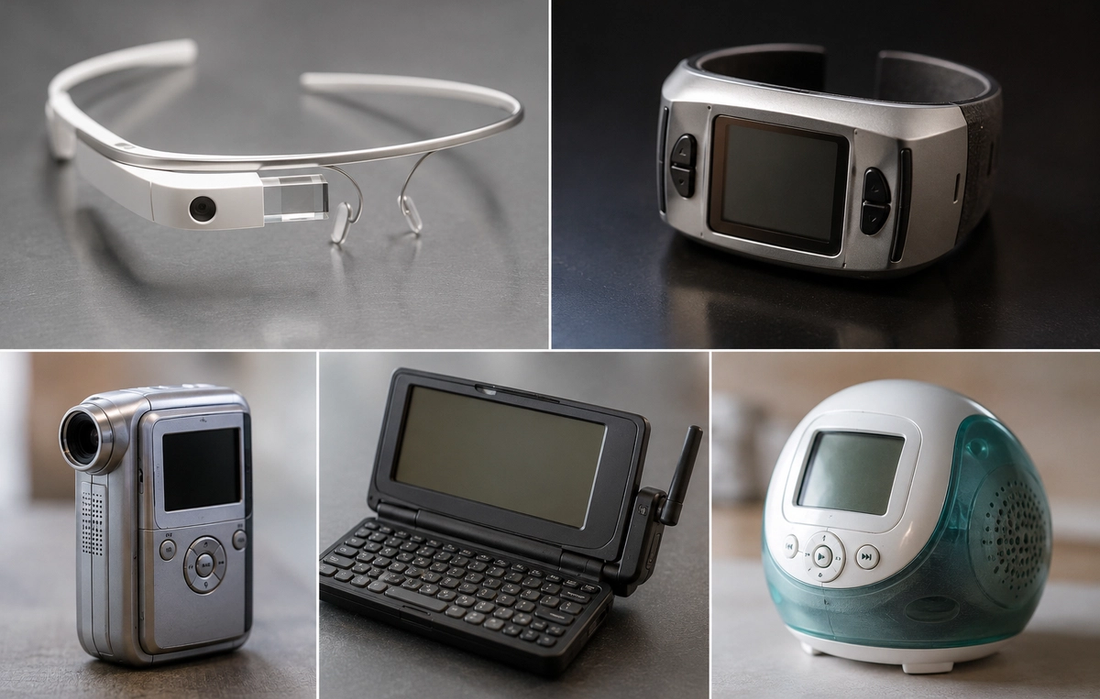
Tech companies love promising the future.
Every few years, a new gadget arrives surrounded by enormous hype, bold predictions, and claims that it will completely transform daily life forever. Investors get excited, headlines explode online, and early adopters rush to buy the “next big thing.”
But not every revolutionary gadget actually changes the world.
Some devices fail because the technology is not ready yet. Others solve problems nobody really had. And sometimes, products are simply overhyped beyond what reality can deliver.
Looking back, some of the most fascinating gadgets in tech history are the ones that promised everything — and quietly disappeared anyway.
Key Takeaways
- Many highly anticipated gadgets failed despite massive hype
- Some products arrived before consumers were ready for them
- Expensive pricing and limited usefulness hurt adoption
- Failed gadgets often still influenced future technology
- Innovation alone does not guarantee success
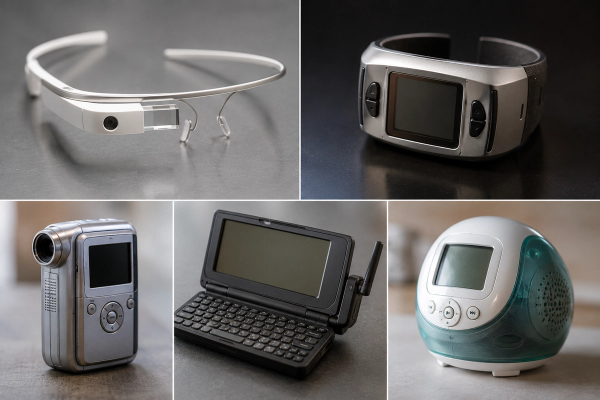
1. Google Glass
When Google Glass appeared in the early 2010s, it looked like science fiction becoming reality.
The smart glasses could display notifications, navigation, photos, and internet information directly in front of the user’s eyes. Tech media immediately described it as the future of computing.
But public reaction quickly turned negative.
People felt uncomfortable around wearable cameras, privacy concerns exploded, and the design made users stand out awkwardly in public. The device was also expensive and limited in practical everyday use.
Google Glass became one of the most famous tech flops of the decade.
Ironically, many companies are still trying to perfect smart glasses today, proving the idea itself may not have been wrong — just too early.
2. Segway
Before smartphones took over the 2000s, many believed the Segway would revolutionize transportation.
Inventor Dean Kamen described the self-balancing scooter as a breakthrough that would redesign cities themselves. Some early reports even suggested it would become as important as the automobile.
That never happened.
While the Segway worked technically, it struggled with:
- High prices
- Limited practicality
- Awkward design
- Regulatory restrictions
- Social embarrassment
Instead of transforming transportation, it mostly became associated with tourists, mall security, and guided city tours.
The hype surrounding the Segway ultimately became much bigger than its real-world impact.
3. 3D Televisions
For a brief moment, tech companies became convinced 3D television was the future of entertainment.
Manufacturers pushed expensive 3D TVs heavily during the early 2010s, promising immersive cinematic experiences inside living rooms.
But consumers quickly lost interest.
The problems were obvious:
- Special glasses were annoying
- Content was limited
- Long viewing sessions caused discomfort
- The experience rarely felt worth the extra cost
Most people simply preferred regular high-definition screens without the hassle.
Within a few years, 3D TVs quietly disappeared from mainstream electronics stores almost entirely.
4. The Juicero
Few failed gadgets became as infamous as the Juicero.
Marketed as a high-tech juicing machine for modern kitchens, the device connected to Wi-Fi and used proprietary juice packets to create fresh drinks.
The company raised huge amounts of investment money and promoted the product as a premium smart appliance.
Then the internet discovered something devastating: people could squeeze the juice packets by hand nearly as effectively as the machine itself.
The expensive gadget instantly became a symbol of unnecessary Silicon Valley excess.
Juicero’s collapse turned into a cautionary tale about tech companies overcomplicating simple problems.
5. Microsoft Zune
The Microsoft Zune had one incredibly difficult problem: it tried competing directly against the iPod at its peak.
Microsoft hoped the Zune would become a major digital music platform, offering music playback, sharing features, and media services.
But despite decent hardware, the device never escaped Apple’s shadow.
The Zune struggled because:
- Apple already dominated the market
- Branding felt weak
- The ecosystem lacked excitement
- Consumers had little reason to switch
Over time, the Zune faded into tech history while the iPod became iconic.
Ironically, many people later admitted the Zune was actually better than its reputation suggested.
Failure Does Not Always Mean Bad Ideas
One interesting thing about failed gadgets is that many contained genuinely good ideas.
Sometimes products fail because:
- Consumers are not ready
- Prices are too high
- Technology is too limited
- Marketing creates unrealistic expectations
In some cases, failed gadgets later inspire successful versions created years afterward.
Google Glass struggled, but augmented reality still continues evolving. Early smart devices failed, but smart homes later became mainstream. Even failed portable gadgets often influence future designs indirectly.
Technology often moves through experimentation.
Hype Can Be More Dangerous Than Failure
One major lesson from these gadgets is that hype can become a problem of its own.
When companies promise products will “change everything,” expectations become almost impossible to satisfy. Even good products can look disappointing if they fail to match exaggerated predictions.
The tech industry thrives on optimism and future-focused storytelling, but reality usually moves slower and messier than marketing suggests.
Not every gadget needs to revolutionize society to matter.
Some Failed Gadgets Become More Interesting Over Time
Ironically, many tech flops become culturally fascinating years later.
People remember failed gadgets because they capture moments when companies tried something ambitious, strange, or overly futuristic. Even unsuccessful devices reveal how people imagined the future at a certain point in time.
And sometimes, failed gadgets are more memorable than successful ones precisely because they dared to dream so big.
After all, the history of technology is not only built by inventions that worked — but also by the ones that almost did.