
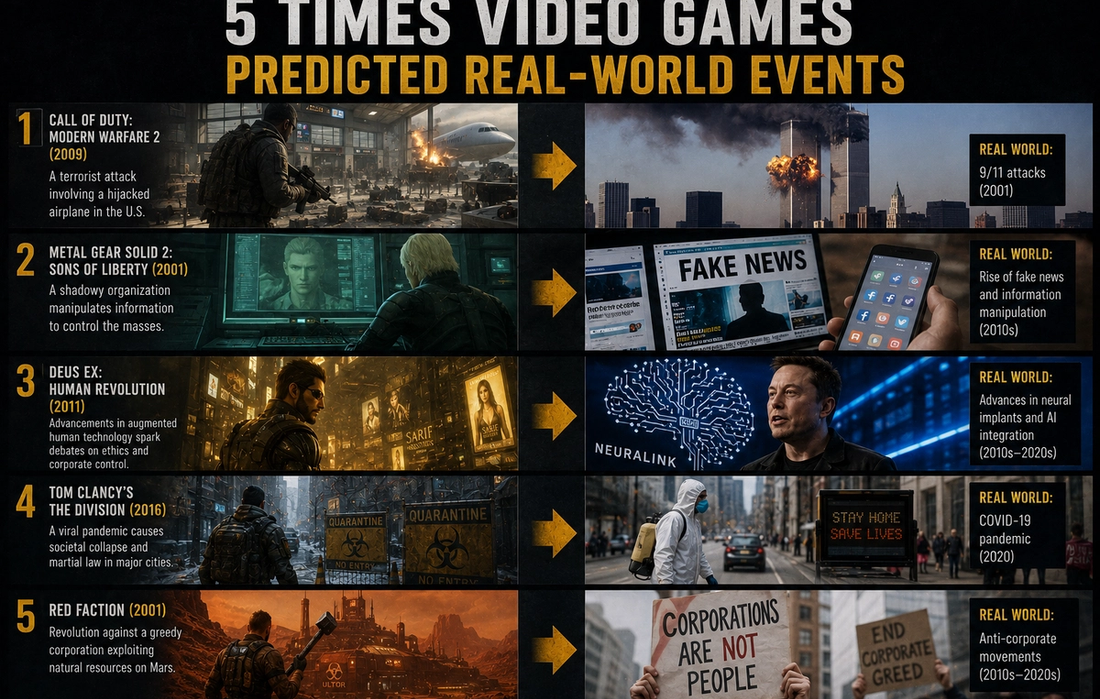
5 Times Video Games Predicted Real-World Events

By Kate Willis on May 18, 2026
Video games are supposed to be fiction.
But sometimes, years after a game releases, players suddenly realize certain storylines, technologies, or social ideas feel strangely familiar to real life. Whether through coincidence, smart social commentary, or surprisingly accurate imagination, some games ended up predicting aspects of the future in ways nobody expected at the time.
Most of these predictions were not exact. Games are not magical prophecy machines. But looking back, certain titles captured real-world trends, fears, and technologies long before they became mainstream realities.
And honestly, some of those predictions feel a little unsettling now.
Key Takeaways
- Some video games explored ideas that later resembled real-world events
- Science fiction games often reflect emerging technological trends
- Predictions usually happen through social commentary rather than pure luck
- Themes like surveillance, AI, pandemics, and misinformation appear frequently
- Gaming often acts as a mirror for society’s future anxieties
1. Metal Gear Solid 2 Predicted Information Overload and Fake News
When Metal Gear Solid 2: Sons of Liberty released in 2001, many players found its ending confusing and bizarre.
The game discussed:
- digital misinformation
- manipulated narratives
- censorship
- algorithmic control
- information overload
At the time, the internet was still relatively young, and the storyline sounded overly paranoid to many players.
Today, however, the game feels strangely modern.
Its themes resemble current debates around:
- social media algorithms
- fake news
- AI-generated content
- online echo chambers
- digital manipulation
The game’s warnings about endless information becoming dangerous rather than liberating now feel surprisingly accurate.
2. Deus Ex Predicted Surveillance Culture
The original Deus Ex explored a futuristic world filled with mass surveillance, government monitoring, cybernetic technology, and corporate power.
Released in 2000, the game imagined societies where digital systems tracked people constantly and privacy became increasingly fragile.
Years later, modern life became filled with:
- smartphones
- facial recognition
- data tracking
- online surveillance
- targeted advertising
While Deus Ex exaggerated these ideas dramatically for storytelling purposes, many of its fears about technology and privacy now feel much less fictional than they once did.
3. Tom Clancy’s The Division Accidentally Felt Too Real
The Division imagined a devastating viral outbreak spreading rapidly through society after Black Friday shopping chaos.
When the game released in 2016, the scenario felt like standard post-apocalyptic fiction.
Then COVID-19 happened.
Suddenly, images from the game — empty streets, overwhelmed systems, panic buying, quarantine zones, and social collapse fears — felt deeply uncomfortable for many players revisiting it during the real pandemic years later.
The game obviously did not predict COVID specifically, but its portrayal of societal reactions during crisis ended up feeling eerily familiar.
4. Watch Dogs Predicted Society’s Obsession With Data
The Watch Dogs series focused heavily on hacking, data collection, surveillance systems, and hyper-connected cities controlled by centralized digital infrastructure.
When the games first appeared, some concepts felt exaggerated.
Now many major cities increasingly rely on:
- smart infrastructure
- connected cameras
- digital monitoring
- algorithmic systems
- large-scale data collection
Modern concerns about privacy, cybersecurity, and personal data echo many of the fears the games explored years earlier.
The idea that nearly everything could become digitally connected no longer feels futuristic at all.
5. Death Stranding Accidentally Reflected Social Isolation
When Death Stranding launched in 2019, many players joked about its strange gameplay centered around isolation, delivery work, and disconnected societies.
Then global lockdowns happened shortly afterward.
Suddenly, themes involving:
- loneliness
- social separation
- delivery dependence
- digital communication
- isolated environments
felt emotionally different.
The game unintentionally mirrored aspects of pandemic-era life so closely that many players later described replaying it as surreal.
Again, this was coincidence rather than prophecy — but timing made the parallels impossible to ignore.
Science Fiction Often Reflects Real Fears
One reason games sometimes appear predictive is because good science fiction usually studies current trends carefully.
Developers often ask:
- Where is technology heading?
- What social fears are growing?
- How might politics evolve?
- What happens if current systems become extreme?
By exaggerating existing trends slightly, games occasionally end up surprisingly close to future reality.
In many cases, they are less “predicting” the future and more recognizing patterns early.
Technology Evolves Faster Than People Expect
Many older futuristic games looked unrealistic at release because technology evolves gradually — until suddenly it does not.
Smartphones, AI systems, surveillance technology, social media algorithms, and digital economies all advanced faster than many people anticipated.
As a result, some fictional worlds started feeling much less fictional surprisingly quickly.
Games Became Serious Social Commentary
Modern games are no longer viewed only as entertainment.
Many developers intentionally use games to explore:
- politics
- ethics
- technology
- environmental collapse
- corporate power
- human behavior
Interactive storytelling allows players to experience imagined futures directly rather than simply watching them passively.
That emotional involvement makes certain predictions feel more powerful afterward.
Sometimes Coincidences Feel Creepy
Of course, not every similarity means games truly predicted reality.
Humans naturally notice patterns and parallels after major events happen. Sometimes timing alone makes fictional stories suddenly feel prophetic in retrospect.
Still, it remains fascinating when older games unexpectedly resemble future developments years later.
Games Quietly Reflect Humanity’s Future Anxiety
Ultimately, video games often reveal less about the future itself and more about what people fear or expect from the future.
Games about AI, surveillance, pandemics, misinformation, or isolation usually emerge because those anxieties already exist beneath the surface culturally.
And occasionally, reality moves close enough to fiction that the line between prediction and coincidence starts feeling strangely blurry.