
The Strange Story of the Furby (And Why It Still Exists)

By Kate Willis on May 17, 2026
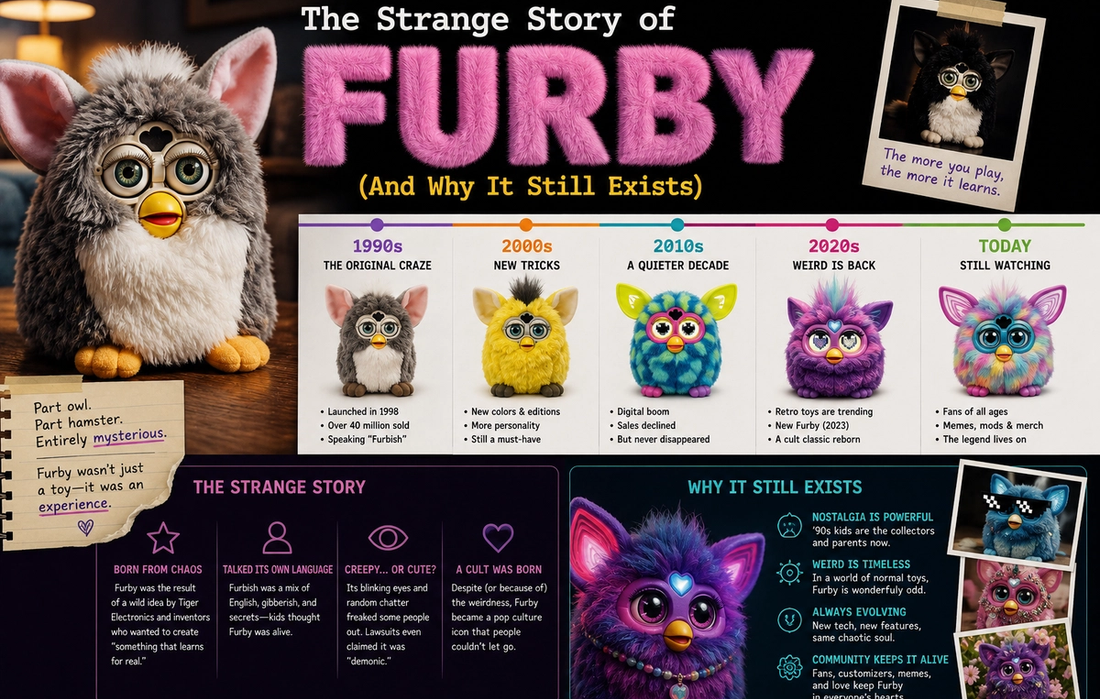
Few toys from the late 1990s were as strange, chaotic, or unforgettable as the Furby.
With its giant eyes, robotic voice, twitchy ears, and unsettling ability to “learn” language over time, the Furby quickly became one of the biggest toy crazes in the world. Kids loved it. Parents were confused by it. Some people were genuinely creeped out by it.
And somehow, decades later, Furby still refuses to disappear.
The toy that once looked like a weird futuristic pet became an internet icon, a nostalgia object, and one of the strangest success stories in gadget history.
Key Takeaways
- Furby became one of the biggest toy crazes of the late 1990s
- The toy mixed robotics, artificial intelligence, and personality simulation
- Furby sparked both fascination and fear among consumers
- Internet culture helped Furby survive far beyond its original era
- Nostalgia and absurdity turned Furby into a lasting cultural symbol
Furby Arrived at the Perfect Time
When Furby launched in 1998, technology still felt magical in a very different way.
Most homes did not yet have smartphones, smart assistants, or AI chatbots. Interactive toys were far less common, which made Furby feel surprisingly advanced at the time.
The toy could:
- Respond to touch
- Move its ears and eyes
- React to sounds
- “Speak”
- Gradually shift from its fictional Furby language into English
To children, it felt almost alive.
That illusion was powerful enough to turn Furby into a global phenomenon almost instantly during the holiday season.
People Thought Furby Was Smarter Than It Really Was
Part of Furby’s success came from misunderstanding how it actually worked.
Many people believed Furby was genuinely learning English over time through artificial intelligence. In reality, the toy was mostly programmed to gradually replace preset Furby words with English phrases during use.
But because interactive technology felt newer back then, the illusion worked extremely well.
Furby created the feeling of personality through:
- Randomized reactions
- Sound responses
- Sleep cycles
- Voice changes
- Repeated interaction
The toy behaved unpredictably enough that users projected emotions and intelligence onto it.
In many ways, Furby was an early lesson in how humans emotionally connect to machines.
The Toy Also Freaked People Out
Not everyone found Furby adorable.
Some people found it deeply unsettling.
Its blinking eyes, sudden movements, robotic voice, and semi-unpredictable behavior created what many now describe as “cute but cursed” energy. Furby quickly became the subject of urban legends, internet jokes, and bizarre rumors.
One of the strangest moments came when reports spread that Furby might secretly record conversations.
In 1999, the National Security Agency reportedly banned Furby from certain facilities because officials worried the toy could potentially repeat sensitive information.
In reality, Furby could not actually record speech, but the panic revealed how unfamiliar people still were with interactive technology at the time.
The Internet Turned Furby Into a Meme
As internet culture evolved, Furby found a second life online.
Older generations who grew up with the toy began sharing nostalgic photos, jokes, and strange modifications years later. Furby slowly transformed from a children’s toy into a surreal internet icon.
The internet especially embraced:
- Creepy Furby memes
- Customized “long Furby” creations
- Horror-inspired redesigns
- Absurd fan art
- Nostalgic collections
What made Furby perfect for internet culture was how strangely emotional people felt about it. The toy existed somewhere between cute, creepy, funny, and nostalgic all at once.
Very few gadgets occupy that exact emotional space.
Furby Quietly Predicted Modern Smart Devices
Looking back, Furby feels oddly ahead of its time.
The toy normalized the idea of interacting conversationally with machines years before voice assistants became common. Today, people casually speak to Alexa, Siri, or Google Assistant without thinking twice.
In the late 1990s, a talking gadget that responded to users still felt futuristic.
Furby introduced many children to the concept of emotionally interactive technology long before AI-powered devices entered homes everywhere.
Nostalgia Keeps Bringing Furby Back
Like many iconic gadgets, Furby survives partly because nostalgia is powerful.
People who grew up during the late 1990s and early 2000s now look back at Furby as a symbol of a very specific technological moment — a time when digital devices still felt weird, experimental, and slightly mysterious.
Modern technology became smoother and more polished. Furby belonged to an era when gadgets still felt awkward and unpredictable in a strangely charming way.
That emotional connection keeps the toy culturally alive even decades later.
Furby Became Bigger Than a Toy
What started as a quirky electronic pet eventually became something much stranger: a permanent piece of internet culture.
Few toys remain recognizable across multiple generations while also evolving into memes, collectibles, horror jokes, and nostalgic icons simultaneously.
But Furby somehow managed to do exactly that.
Its lasting popularity says something important about technology itself. People do not only remember devices because they were useful. They remember them because they felt emotionally memorable, bizarre, exciting, or completely unlike anything else at the time.
And in that sense, Furby may be one of the most unforgettable gadgets ever created.