The Wild Theory That the Universe Might Be a Simulation

By Kate Willis on May 17, 2026
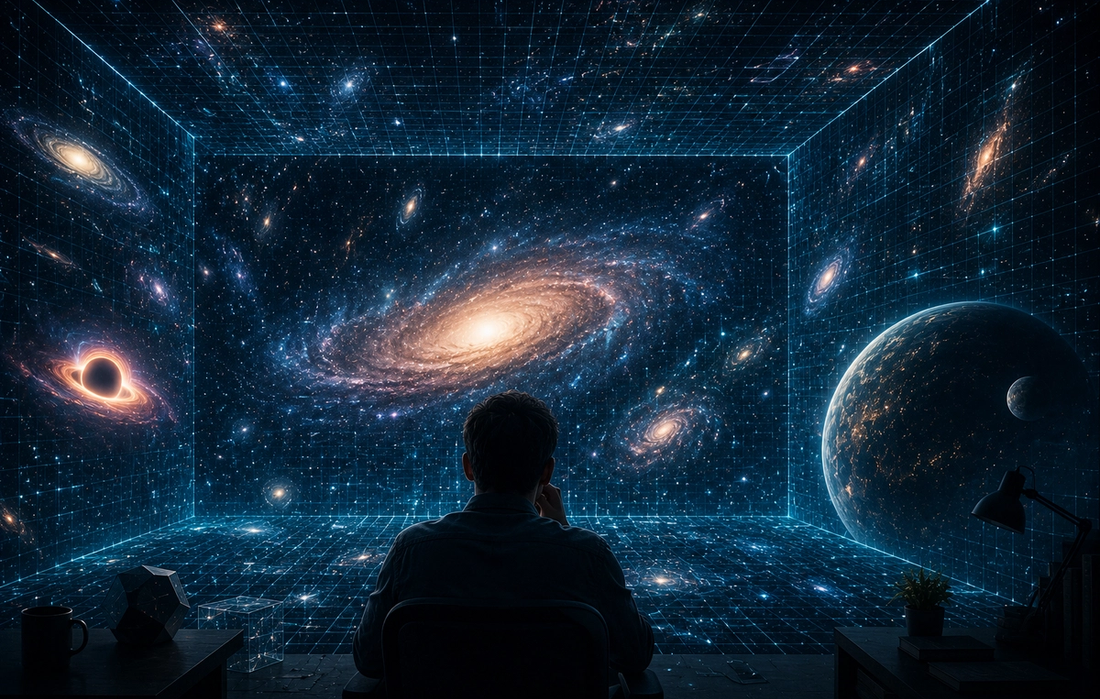
At some point, almost everyone has had the same strange thought: What if reality is not actually real?
It sounds like pure science fiction, something pulled from movies like The Matrix. But surprisingly, the idea that the universe could be a simulation has been discussed seriously by philosophers, scientists, and tech figures for years.
The simulation theory suggests that reality itself may be artificial — a highly advanced digital environment created by some far more intelligent civilization.
No one can prove the theory is true. No one can fully disprove it either.
And that uncertainty is exactly why people find the idea so fascinating.
Key Takeaways
- Simulation theory suggests reality could be artificially created
- The concept combines philosophy, technology, and physics
- Some scientists and tech leaders take the idea seriously
- There is currently no evidence proving the theory true
- The theory raises major questions about consciousness and reality itself
Where the Simulation Theory Came From
The modern version of the simulation argument became widely known after philosopher Nick Bostrom published a paper in 2003.
His argument was surprisingly simple.
If civilizations become advanced enough technologically, they may eventually create extremely realistic simulations containing conscious beings. If such simulations become common, simulated realities could eventually outnumber “real” ones.
Statistically, that would mean there is a possibility we are more likely living inside a simulation than original reality.
The theory does not claim the universe definitely is fake — only that it may be possible.
Why the Idea Sounds Less Crazy Than It Used To
Part of what makes simulation theory interesting is how quickly technology is advancing in the real world.
Humans already create:
- virtual reality environments
- AI-generated worlds
- realistic video games
- digital simulations
- artificial intelligence systems
Every year, digital environments become more immersive and convincing.
If technology keeps advancing for thousands or millions of years, some people argue that future civilizations could potentially simulate entire worlds indistinguishable from reality itself.
The idea feels unsettling partly because humans are already building primitive versions of simulated realities now.
Some Scientists Point to Strange Features of Physics
Certain aspects of modern physics also fuel speculation around simulation theory.
Some people point to things like:
- quantum uncertainty
- mathematical structures in nature
- limits on information
- spacetime behavior
- computational patterns in physics
These observations do not prove the universe is simulated, but they inspire philosophical questions about whether reality behaves somewhat like an information-processing system.
For example, some theorists compare physical limits in the universe to computational limitations in digital systems.
Again, none of this is proof — but it keeps the theory alive in scientific and philosophical discussions.
The Theory Became Popular in Internet Culture
Simulation theory exploded online partly because it fits perfectly into modern internet culture.
The idea combines:
- science fiction
- philosophy
- gaming culture
- AI anxiety
- existential curiosity
Memes about “glitches in the matrix” became extremely common online whenever people experienced coincidences, strange moments, or unusual patterns in everyday life.
The theory also resonates strongly with gamers because modern video games already simulate increasingly realistic worlds with artificial characters and environments.
People naturally wonder: if humans can create small simulated worlds, could something larger exist above ours?
Critics Say the Theory Is Impossible to Prove
One major criticism of simulation theory is that it may not actually qualify as science.
A scientific theory normally requires testable evidence or experiments. Simulation theory currently lacks clear ways to verify whether reality is artificial.
Many scientists argue the idea belongs more to philosophy than physics.
Others point out that humans may simply be projecting digital metaphors onto reality because computers became central to modern life.
In previous centuries, people compared the universe to clocks or machines. Today, people compare it to software and simulations.
The Idea Raises Strange Questions About Consciousness
One reason simulation theory feels emotionally powerful is because it forces people to question reality itself.
If reality were simulated:
- Would consciousness still matter?
- Would emotions still be real?
- Would meaning disappear?
- Would free will exist?
Interestingly, many philosophers argue that even if reality were artificial, human experiences would still feel real to the beings experiencing them.
Pain, joy, love, fear, and memory would remain emotionally meaningful regardless of the system underneath.
That idea makes the theory feel less purely technical and more deeply existential.
Humans Are Drawn to Big Cosmic Questions
Part of the reason simulation theory became so popular is because humans naturally search for explanations about existence.
Throughout history, people created philosophical, religious, and scientific frameworks to understand:
- why the universe exists
- where consciousness comes from
- whether reality has deeper meaning
Simulation theory is, in some ways, a modern technological version of those ancient questions.
It reflects how digital culture now shapes humanity’s imagination about existence itself.
Nobody Actually Knows
The most important thing about simulation theory is that nobody truly knows.
There is no confirmed evidence proving reality is simulated. There is also no definitive proof ruling it out completely.
For now, the theory remains an intriguing philosophical possibility rather than established science.
But perhaps the reason people keep returning to the idea is because it taps into something timeless: the unsettling realization that humans still understand very little about reality itself.
And sometimes, the biggest mysteries are the ones people cannot fully answer at all.