
The Robots Already Living Among Us and Where They Are Headed Next

By Kate Willis on May 17, 2026
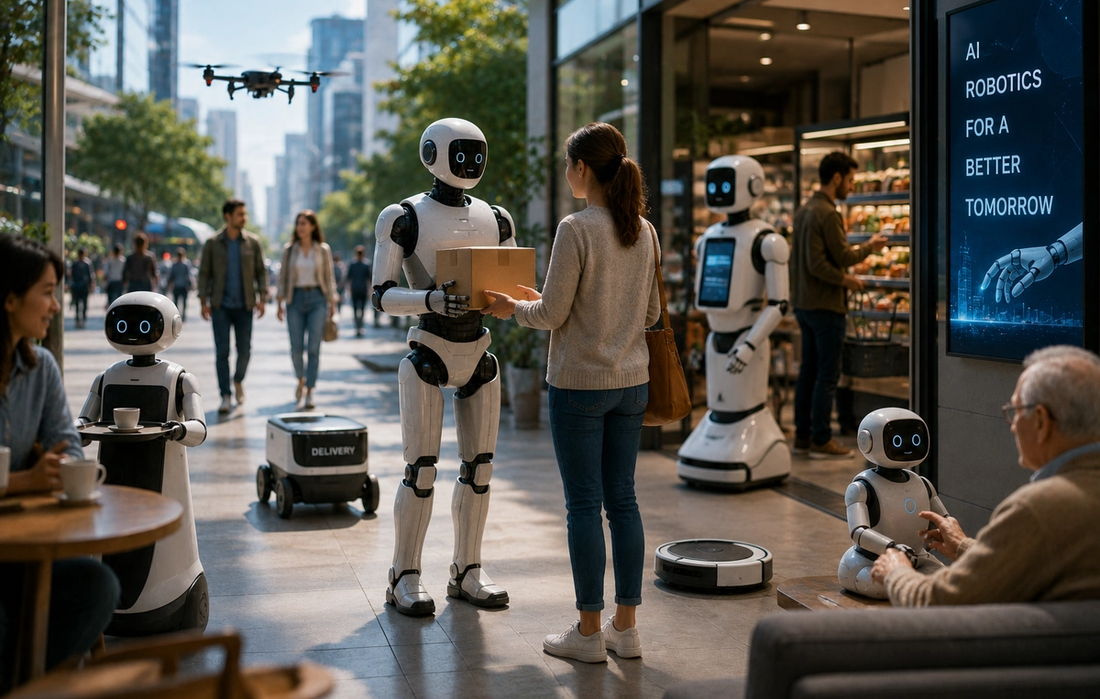
When people hear the word “robot,” they often imagine futuristic machines walking through cities or talking like humans in science fiction movies. But robots are already part of everyday life, most of them just do not look the way people expect.
From warehouses and hospitals to restaurants and homes, robots quietly handle tasks that used to require constant human effort. Some are highly advanced, while others are surprisingly simple. Together, they are slowly changing how people live and work.
And this is only the beginning.
Key Takeaways
- Robots already play major roles in industries like manufacturing, healthcare, and delivery
- Most modern robots are designed for specific tasks rather than human-like behavior
- Automation is expanding rapidly in warehouses and logistics
- AI is making robots smarter and more adaptable
- Future robots will likely become more common in everyday environments
Robots Are Already Everywhere
Many people interact with robots daily without even thinking about it.
Factories have used robotic arms for decades to assemble cars, electronics, and appliances with incredible precision. These machines can repeat tasks faster and more consistently than humans, making manufacturing far more efficient.
Warehouses have also become heavily automated. Companies like Amazon use fleets of robots to move shelves, organize products, and speed up deliveries. Instead of workers walking through giant storage facilities, robots often bring items directly to them.
Even homes now contain small forms of robotics. Robot vacuum cleaners, lawn mowers, and smart appliances have quietly become part of modern life.
The robot revolution did not arrive all at once. It happened gradually.
Healthcare Is Becoming Increasingly Robotic
Hospitals and medical centers are also using robotics more than ever before.
Surgical robots help doctors perform delicate procedures with greater precision. These systems do not replace surgeons, but they can improve accuracy and reduce recovery times for patients.
Some hospitals use robots to transport supplies, disinfect rooms, or deliver medication. In elderly care, robotic assistants are being developed to help with monitoring, companionship, and mobility support.
As healthcare systems face worker shortages and aging populations, robotics will likely play an even larger role in the future.
AI Is Making Robots Smarter
Traditional robots were built to repeat the same task over and over. Modern robots are becoming more flexible thanks to artificial intelligence.
AI allows machines to recognize objects, adapt to changing environments, and improve through experience. Some robots can now navigate crowded spaces, understand speech, or respond to human behavior more naturally.
This shift is important because it moves robots beyond simple repetitive labor into more unpredictable real-world situations.
Self-driving delivery robots, warehouse systems, and customer service machines all rely heavily on AI-powered decision-making.
Human-Like Robots Are Improving Fast
Humanoid robots still have limitations, but progress is happening quickly.
Companies around the world are developing robots capable of walking, carrying objects, climbing stairs, and interacting with people. Some are designed for customer service, caregiving, or dangerous industrial environments.
Despite the attention they receive online, fully human-like robots are still relatively rare compared to specialized machines built for specific jobs.
For now, most robots succeed because they focus on one task extremely well rather than trying to behave exactly like humans.
The Future Will Feel More Automated
Robots are expected to become much more common over the next decade.
Delivery systems, transportation, agriculture, healthcare, and retail are all moving toward increased automation. Some jobs will change dramatically, while entirely new industries may emerge around robotics and AI maintenance.
At the same time, concerns about job displacement, privacy, and over-automation continue to grow. Many people worry about how quickly machines are replacing human labor in certain industries.
Still, history shows that technology often changes jobs rather than simply eliminating them altogether.
Robots Are Becoming Part of Everyday Life
The most surprising thing about modern robotics is how normal it already feels.
People once imagined robots as futuristic fantasies. Now they clean homes, assist surgeries, manage warehouses, and help power global delivery systems, often without drawing much attention.
The future of robotics may not arrive through dramatic sci-fi moments. Instead, it will likely continue happening quietly, one useful machine at a time.
And before long, living alongside robots may feel just as ordinary as carrying a smartphone does today.