

The Loneliness of the Always-Online Generation

By Kate Willis on May 17, 2026
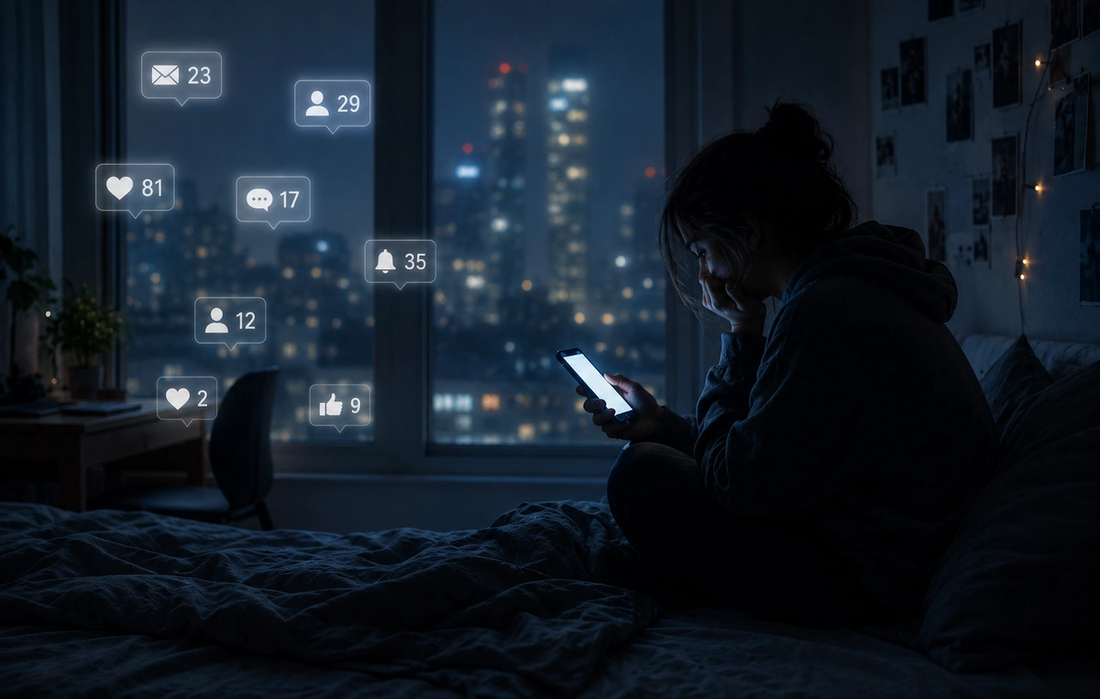
Modern technology made communication easier than ever before. People can message friends instantly, join online communities, video call across continents, and stay connected every hour of the day.
Yet despite being constantly connected, many people feel increasingly lonely.
It is one of the strangest contradictions of the digital age: a generation surrounded by communication tools is struggling with isolation, social exhaustion, and emotional disconnection more than expected.
Being online all the time does not always mean feeling close to others.
Key Takeaways
- Constant digital connection does not automatically reduce loneliness
- Social media can create comparison, pressure, and emotional exhaustion
- Online interaction often replaces deeper in-person connection
- Many younger people feel socially connected but emotionally isolated
- Technology changes how people experience friendship and community
Being Connected Is Not the Same as Feeling Connected
One of the biggest misunderstandings about technology is the idea that communication automatically creates closeness.
Messaging apps, social platforms, and group chats make interaction constant, but many of those interactions are brief, fragmented, and surface-level.
People may spend hours talking online while still feeling emotionally disconnected.
A person can receive notifications all day long and still feel lonely at night.
Human connection often depends on things technology struggles to fully replicate:
- Physical presence
- Eye contact
- Shared environments
- Undivided attention
- Emotional depth
Digital communication is fast and convenient, but it can also feel strangely empty over time.
Social Media Turned Social Life Into Performance
Social media changed how people present themselves to others.
Instead of simply interacting, users now constantly curate photos, opinions, achievements, and lifestyles for public visibility. This creates pressure to appear interesting, successful, attractive, or happy at all times.
As a result, many online interactions start feeling performative rather than personal.
People compare themselves constantly:
- Careers
- Relationships
- Appearance
- Friend groups
- Vacations
- Success
Even when users understand intellectually that social media is curated, emotional comparison still happens automatically.
The result is often increased anxiety, insecurity, and feelings of isolation.
Online Spaces Can Feel Crowded but Emotionally Thin
The internet provides endless access to people, content, and conversation, but quantity does not always create meaningful connection.
Many online interactions happen quickly and disappear just as fast. Conversations become fragmented across notifications, memes, comments, and short messages.
In some ways, people are socializing more frequently but less deeply.
Long conversations, uninterrupted attention, and slow-growing friendships have become harder to maintain in environments built around constant stimulation and distraction.
The internet can create the feeling of being surrounded by people while still feeling emotionally alone.
Younger Generations Grew Up Entirely Online
For younger generations, digital life is not separate from “real life.” It is deeply integrated into identity, friendship, dating, entertainment, and self-expression.
That constant connectivity creates unique social pressure.
People are now reachable almost all the time. Delayed replies can create anxiety. Silence online may feel personal. Social validation becomes heavily tied to likes, views, and engagement.
At the same time, many younger users feel exhausted by the pressure to remain visible and socially active online.
Being permanently connected can become emotionally draining.
Technology Also Replaced Certain Physical Communities
Another reason loneliness feels more common is that many traditional forms of community weakened over time.
People increasingly:
- Work remotely
- Shop online
- Stream entertainment alone
- Spend less time in public spaces
- Socialize digitally instead of physically
Technology made life more convenient, but convenience can unintentionally reduce spontaneous human interaction.
Small everyday moments — chatting with neighbors, meeting friends casually, or spending time in shared spaces — became less common in many places.
Digital connection expanded while physical community sometimes shrank.
The Internet Still Helps People Feel Less Alone
At the same time, technology is not entirely negative.
For many people, online spaces provide support, belonging, and friendship they may struggle to find locally. Communities built around shared interests, identities, hobbies, or experiences can be genuinely meaningful.
The internet helps people:
- Find support groups
- Maintain long-distance friendships
- Discover like-minded communities
- Express themselves creatively
For some users, online connection feels safer or more accessible than in-person interaction.
The issue is not that technology destroys connection completely. It is that digital connection often works differently than human beings emotionally expect.
Loneliness Became a Quiet Part of Modern Life
One reason this issue feels so strange is because loneliness often hides behind constant activity.
Someone can appear socially active online while privately feeling disconnected. Endless scrolling and messaging can even distract people from recognizing loneliness directly.
Modern life rarely feels quiet enough to notice emotional emptiness immediately.
But over time, many people realize that constant digital stimulation does not necessarily create emotional fulfillment.
People Are Starting to Crave More Real Connection Again
In response, many people are slowly trying to rebalance their relationship with technology.
There is growing interest in:
- Spending less time online
- Smaller social circles
- In-person hobbies
- Phone-free time
- Slower communication
- More intentional friendships
People are not rejecting technology completely. They are questioning whether constant online presence is actually satisfying emotional needs the way they hoped.
The always-online generation may be more connected than any generation before it — but that does not automatically make it less lonely.
And perhaps that realization is why so many people are now searching for something deeper than just another notification.