
The Dark Side of Smart Devices: Privacy Risks in Your Own Home

By Kate Willis on May 17, 2026
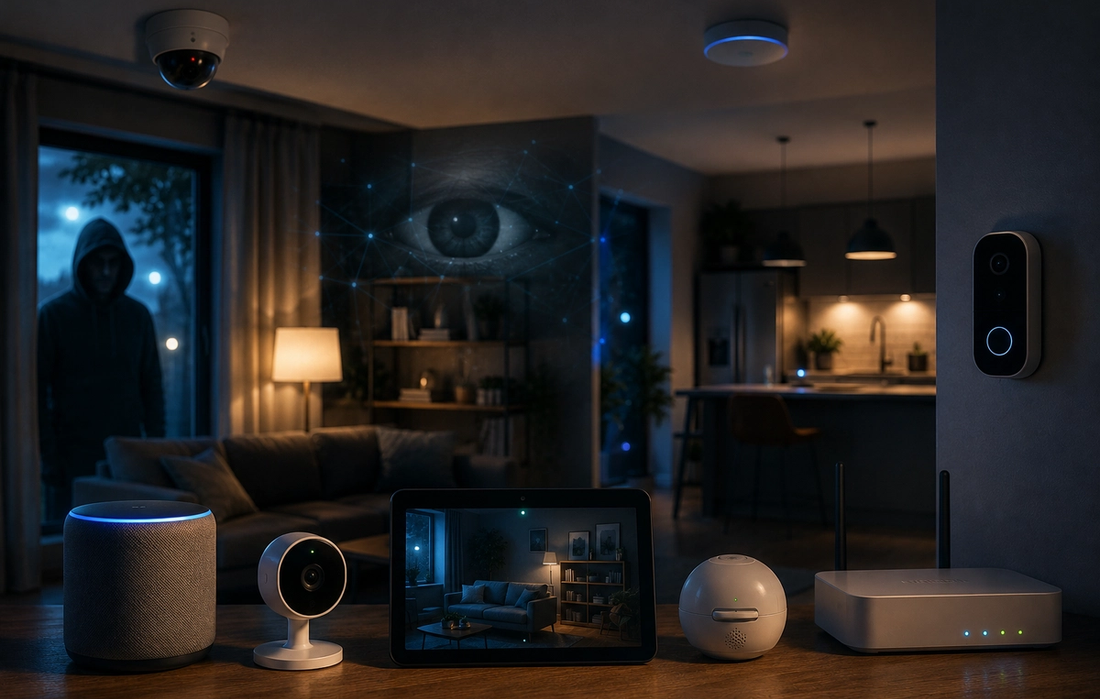
Smart devices were designed to make life easier. Smart speakers answer questions instantly, security cameras monitor homes remotely, thermostats adjust temperatures automatically, and smart TVs recommend entertainment with almost frightening accuracy.
But convenience often comes with a hidden tradeoff: data collection.
Many people do not realize how much information smart devices gather daily. In some cases, devices inside homes may know more about personal routines, habits, and behaviors than close friends do.
As smart homes become more common, privacy concerns are becoming harder to ignore.
Key Takeaways
- Smart devices collect large amounts of user data
- Microphones, cameras, and sensors can create privacy risks
- Many devices rely heavily on cloud services
- Weak security settings can expose personal information
- Convenience and privacy often exist in tension
Smart Devices Constantly Collect Information
Most smart devices rely on data to function properly.
Voice assistants need to process speech commands. Smart thermostats learn temperature preferences. Security cameras detect movement. Fitness trackers monitor health activity.
The problem is not necessarily that these devices collect data — it is how much they collect, how long it is stored, and who can potentially access it.
Depending on the product, smart devices may gather:
- Voice recordings
- Location data
- Usage habits
- Sleep patterns
- Viewing history
- Home activity schedules
- Device interactions
Over time, this creates surprisingly detailed profiles of everyday life.
Voice Assistants Are Always Listening for Wake Words
Devices like Amazon Echo, Google Nest, and Apple HomePod are designed to listen continuously for activation phrases like “Alexa” or “Hey Google.”
Companies insist these devices only begin processing commands after hearing the wake word, but accidental activations happen more often than many users realize.
There have been cases where private conversations were unintentionally recorded or stored. Some companies have also used human reviewers to analyze voice recordings in order to improve AI systems, which raised major privacy concerns when revealed publicly.
For many people, the idea of internet-connected microphones inside bedrooms and living rooms still feels unsettling.
Smart Cameras Create New Security Concerns
Home security cameras can provide peace of mind, but they also introduce serious privacy risks if poorly secured.
Weak passwords, outdated firmware, or unsecured networks can sometimes allow outsiders to access camera feeds remotely.
There have been real cases where hackers gained control of indoor cameras and spoke to families through built-in microphones.
Even without hacking, users must still trust companies handling the video data responsibly. Cloud storage systems may retain footage longer than expected, and privacy policies are not always easy to understand.
The same technology designed to improve safety can also become invasive if mishandled.
Smart TVs Know More Than Most People Expect
Many modern smart TVs track viewing behavior extensively.
Some televisions use automatic content recognition systems that monitor what users watch — including cable channels, streaming apps, and even gaming activity.
That information may then be used for advertising, recommendations, or data-sharing partnerships.
Because smart TVs often look like ordinary appliances, people sometimes forget they function more like internet-connected computers.
Some models even include microphones, cameras, or voice-control features that raise additional privacy questions.
Convenience Often Depends on Cloud Services
Many smart devices rely heavily on cloud computing.
Instead of processing information locally inside the home, data is frequently sent to external servers where companies analyze and store it.
This creates several concerns:
- Data breaches
- Unauthorized access
- Long-term storage
- Third-party sharing
- Dependence on company policies
If a company changes its privacy rules or shuts down support entirely, device functionality can sometimes disappear overnight.
Users are not only buying hardware anymore — they are often entering long-term relationships with cloud ecosystems.
Weak Security Makes Smart Homes Vulnerable
Many smart devices prioritize convenience over strong security.
Default passwords, outdated software, and infrequent updates can create vulnerabilities that hackers exploit. Some cheaper devices receive little long-term support at all.
Once connected to a home network, insecure devices may provide entry points for larger attacks.
Cybersecurity experts often recommend:
- Changing default passwords immediately
- Enabling two-factor authentication
- Updating device firmware regularly
- Separating smart devices onto guest networks
- Researching brands before purchasing
Basic precautions can significantly reduce risk.
Privacy Policies Are Often Difficult to Understand
One of the biggest challenges with smart devices is transparency.
Most users never fully read privacy agreements or data collection policies because they are long, technical, and difficult to interpret.
As a result, many people do not actually know:
- What information is collected
- How long it is stored
- Whether it is shared with advertisers
- Who can access it internally
- How it is protected
Convenience often encourages users to click “accept” without fully understanding the consequences.
Smart Homes Are Still Becoming More Popular
Despite privacy concerns, smart devices continue growing rapidly because they genuinely improve convenience for many people.
Smart homes can:
- Save energy
- Improve accessibility
- Increase security
- Automate repetitive tasks
- Simplify daily routines
The issue is not whether smart technology is inherently bad. The issue is understanding the tradeoffs that come with constant connectivity.
Many people willingly exchange some privacy for convenience without realizing how much data is involved.
The Future of Smart Living Will Depend on Trust
Smart devices are likely to become even more integrated into daily life in the coming years. Homes may become increasingly automated, personalized, and connected.
But long-term trust will depend heavily on how companies handle privacy, security, and transparency.
Consumers are becoming more aware of digital surveillance and data collection than they were a decade ago. People increasingly want convenience without feeling constantly monitored inside their own homes.
The challenge for the future is finding a balance between smart technology and personal privacy.
Because while connected homes may feel futuristic, many people still want their homes to remain private spaces first.