
The Cultural Power of the LAN Cable

By Kate Willis on May 17, 2026
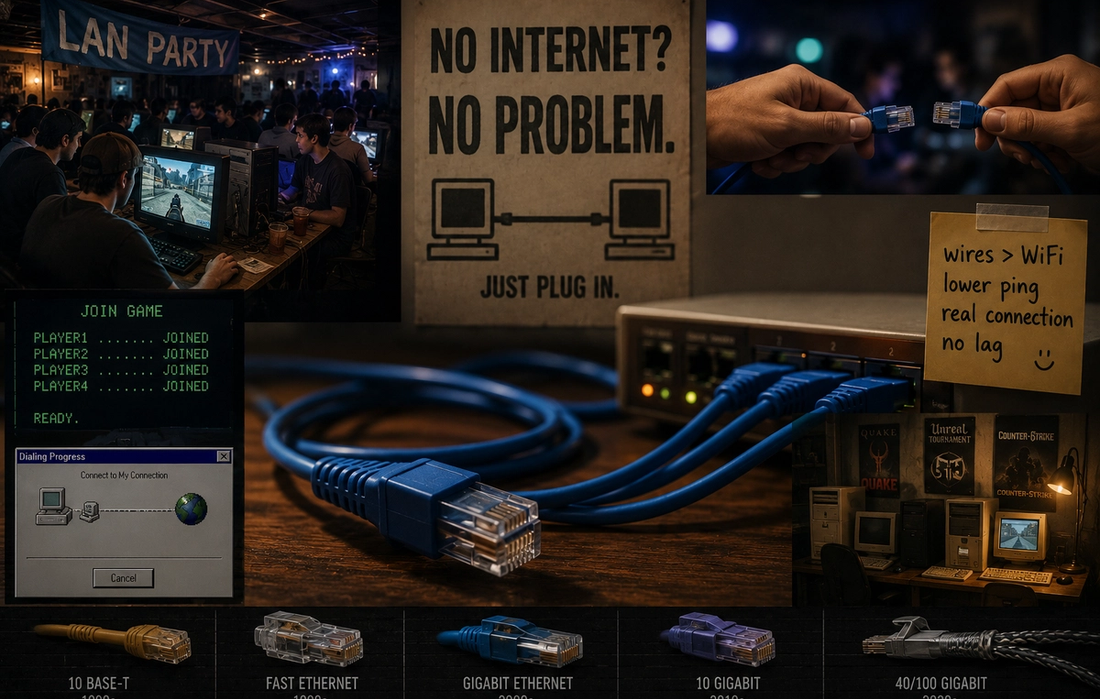
Before modern online gaming became instant and wireless, multiplayer gaming looked very different.
People carried bulky computers across cities, untangled endless wires, and spent hours setting up local networks just to play games together in the same room. It was inconvenient, chaotic, and sometimes physically exhausting.
And yet, many gamers still remember LAN parties as some of the best gaming experiences they ever had.
The humble LAN cable — something most people barely think about today — quietly helped shape internet culture, competitive gaming, and online friendships in ways that still influence gaming communities now.
Key Takeaways
- LAN gaming played a major role in early multiplayer culture
- Local multiplayer created stronger in-person social experiences
- LAN parties helped build competitive gaming communities
- Wired connections became symbols of reliability and shared experiences
- Many gamers still feel nostalgic for the social atmosphere of LAN culture
What LAN Gaming Actually Was
LAN stands for Local Area Network.
Before high-speed internet became common, players often connected computers directly through cables and local routers to play multiplayer games together in the same physical location.
This allowed gamers to compete without relying on online servers.
Popular LAN games included:
- Counter-Strike
- Halo
- Quake
- StarCraft
- Warcraft III
- Unreal Tournament
Instead of playing anonymously with strangers online, people sat side by side, sharing snacks, yelling across rooms, and reacting to matches in real time.
Gaming felt intensely social in a very physical way.
LAN Parties Became Entire Events
LAN gaming quickly evolved into full social gatherings.
Friends would carry giant desktop computers, monitors, keyboards, speakers, and cables into basements, garages, schools, or internet cafés for overnight gaming sessions.
Setting everything up often took hours.
There were always:
- tangled wires
- technical problems
- overheating computers
- broken drivers
- missing cables
And somehow, that chaos became part of the experience itself.
LAN parties felt less like simply playing games and more like participating in small temporary communities built entirely around shared obsession.
Playing Together Felt Different
Modern online gaming offers convenience, but LAN gaming created a different kind of energy.
When everyone sat in the same room:
- reactions felt immediate
- rivalries became personal
- victories felt louder
- friendships formed faster
Trash talk happened face-to-face instead of through anonymous voice chat. People celebrated together physically. Losing a match felt different when opponents sat two meters away laughing at you directly.
That social atmosphere created stronger emotional memories than many modern online experiences.
The LAN Cable Became a Symbol of Reliability
Gamers also loved LAN connections because they simply worked better.
Before stable broadband internet became widespread, online gaming often meant:
- lag
- disconnects
- slow speeds
- unstable servers
LAN connections were fast, direct, and reliable.
Competitive players especially valued wired setups because every millisecond mattered in fast-paced shooters and strategy games.
Even today, many serious gamers still prefer Ethernet cables over Wi-Fi for performance reasons.
The LAN cable became associated with serious gaming culture itself.
Internet Cafés Helped Spread Gaming Culture Worldwide
In many countries, internet cafés played a huge role in LAN culture.
Not everyone owned powerful gaming PCs at home, so cafés became gathering places where players competed locally for hours at a time.
These spaces helped build:
- esports communities
- gaming friendships
- local rivalries
- modding cultures
For many teenagers, internet cafés became social hubs almost as important as schools or sports clubs.
Gaming was not just entertainment — it became a shared cultural activity.
Online Gaming Slowly Replaced LAN Culture
As internet speeds improved, LAN gaming became less necessary.
Online matchmaking allowed players to connect instantly from anywhere in the world without carrying heavy equipment or physically gathering in one place.
Convenience won.
Games became easier to access, and online multiplayer exploded globally. But something else quietly changed too: gaming became more isolated.
Instead of rooms full of people laughing together, many players now game alone while connected digitally through headsets and servers.
The social experience shifted from physical presence to online interaction.
People Miss the Human Side of LAN Gaming
Part of the nostalgia surrounding LAN culture is not really about the technology itself.
It is about:
- shared experiences
- physical gatherings
- spontaneous moments
- local communities
- real-world friendships
Modern online gaming is larger and more advanced, but it often lacks the same atmosphere of being physically together in one chaotic room for an entire weekend.
The inconvenience was part of what made it memorable.
LAN Culture Helped Shape Modern Esports
Competitive gaming owes a huge amount to early LAN events.
Before esports became billion-dollar entertainment, local tournaments and LAN parties helped create competitive communities around games like Counter-Strike and StarCraft.
Those grassroots gatherings built the foundation for:
- professional teams
- tournaments
- livestreaming culture
- modern esports arenas
Today’s massive gaming events still carry traces of that original LAN spirit.
The LAN Cable Represents More Than Technology
The reason people still romanticize LAN gaming is because it represents a more social era of internet culture.
The cable itself became symbolic: a physical connection between players sharing the same space, the same energy, and the same experience in real time.
Modern gaming may be more advanced than ever, but many players still miss the feeling of sitting in a crowded room surrounded by glowing monitors, tangled wires, and people yelling over impossible matches at three in the morning.
Because sometimes, the most memorable part of technology is not the hardware itself — but the human experiences built around it.