
Is Your Password Safe? A Beginner’s Guide to Cybersecurity Hygiene

By Kate Willis on May 17, 2026
Most people know weak passwords are risky, yet millions still use combinations like “123456,” “password,” or their pet’s name for important accounts. The problem is not that people do not care about cybersecurity; it is that digital safety often feels confusing, overwhelming, or easy to ignore until something goes wrong.
But good cybersecurity habits are usually much simpler than people think.
In reality, protecting online accounts often comes down to a few basic practices that dramatically reduce the chances of getting hacked, scammed, or locked out of important services.
Key Takeaways
- Weak or reused passwords remain one of the biggest security risks online
- Password managers can make account security much easier
- Two-factor authentication adds a major layer of protection
- Phishing scams often target human mistakes rather than technology
- Good cybersecurity hygiene is mostly about consistency
Why Passwords Still Matter So Much
Passwords are still the front door to most digital accounts.
Email, banking apps, social media, cloud storage, streaming platforms, and work accounts all depend on passwords to protect personal information. If attackers gain access to one important account — especially email — they can often reset passwords for many others.
The biggest problem is password reuse.
Many people use the same password across multiple websites because it feels easier to remember. But if one site suffers a data breach, hackers often try those same login details on other platforms.
This is called credential stuffing, and it remains extremely common.
A single leaked password can sometimes unlock an entire digital life.
What Makes a Password Actually Strong?
Strong passwords are less about complexity and more about unpredictability.
A good password should:
- Be long
- Avoid common words or phrases
- Not include personal information
- Be unique for every account
Surprisingly, longer passwords are often safer than overly complicated short ones.
For example:
- “BlueCoffeeRainTiger88” is usually stronger than “Tg$4!”
Randomness matters because hackers rely heavily on automated guessing systems that test millions of common combinations very quickly.
The harder a password is to predict, the safer it becomes.
Password Managers Solve a Huge Problem
Trying to remember dozens of strong, unique passwords is unrealistic for most people.
That is why password managers have become so useful.
A password manager securely stores login credentials and can generate strong passwords automatically. Instead of remembering dozens of different passwords, users only need to remember one master password.
Many people hesitate to use password managers because storing everything in one place sounds risky. But reputable password managers are generally far safer than reusing weak passwords across multiple accounts.
In many ways, password managers reduce human error — which is often the biggest cybersecurity weakness.
Two-Factor Authentication Is One of the Best Defenses
Even strong passwords are not perfect. That is where two-factor authentication, often called 2FA, becomes important.
With 2FA enabled, logging in requires both a password and a second verification step, such as:
- A code sent to your phone
- An authentication app
- A security key
- Biometric verification
This means attackers usually cannot access an account even if they somehow steal the password.
Many major platforms now strongly encourage 2FA because it dramatically improves account security with very little extra effort.
It is one of the simplest cybersecurity upgrades people can make.
Phishing Scams Are Designed to Trick People
Not all cyberattacks involve breaking through technical systems. Many simply rely on manipulation.
Phishing scams attempt to trick users into revealing passwords, payment details, or personal information through fake messages and websites.
These scams often create urgency:
- “Your account has been compromised”
- “Immediate action required”
- “Suspicious login detected”
- “Your package delivery failed”
Modern phishing attempts can look surprisingly convincing. Some fake websites are nearly identical to real ones.
That is why slowing down matters. Clicking less impulsively and double-checking links, senders, and login pages can prevent many common attacks.
Software Updates Matter More Than People Think
People often ignore software updates because they feel annoying or inconvenient.
But updates frequently contain security patches that fix newly discovered vulnerabilities. Delaying updates gives attackers more time to exploit weaknesses that companies already know about.
Phones, laptops, apps, browsers, routers, and operating systems all benefit from regular updates.
In cybersecurity, staying current matters.
Good Cybersecurity Is Mostly About Habits
Cybersecurity sometimes sounds highly technical, but basic protection often comes down to everyday habits.
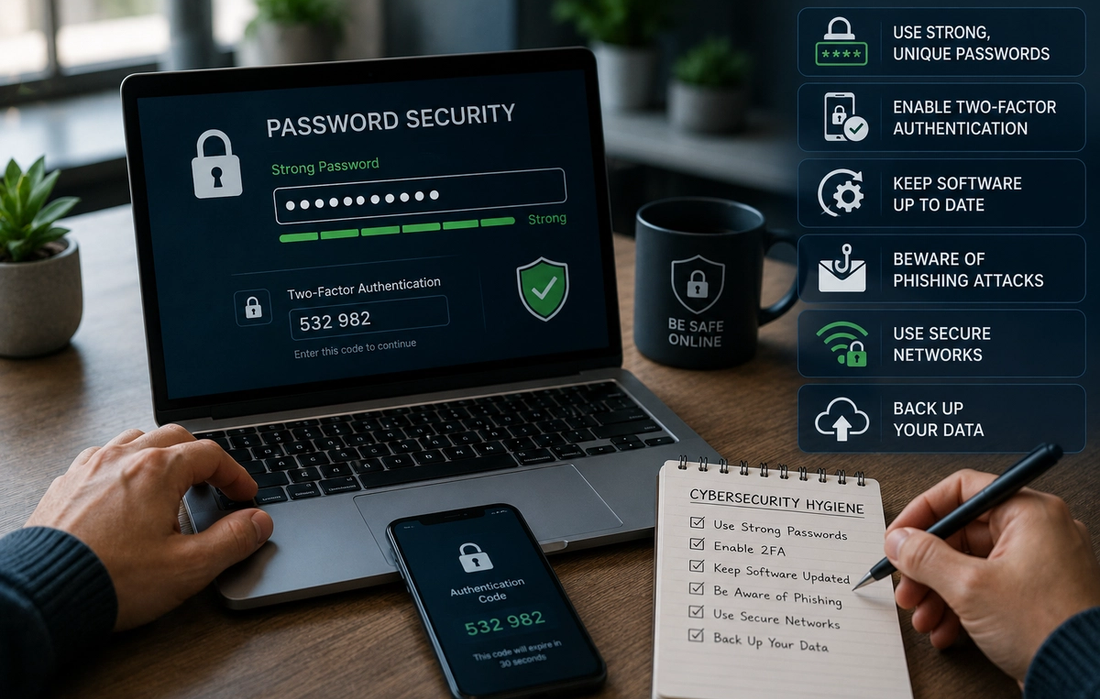
Using strong passwords, enabling two-factor authentication, avoiding suspicious links, and keeping software updated already puts most users far ahead of common threats.
Hackers often look for easy opportunities rather than impossible targets.
The goal is not becoming completely unhackable — that is unrealistic. The goal is making yourself difficult enough to target that attackers move on to easier victims instead.
Small habits create strong digital security over time.
Online Safety Is Now Part of Everyday Life
The internet has become deeply connected to modern life. Banking, communication, work, entertainment, and personal memories all exist online in some form.
That makes cybersecurity less of a niche tech issue and more of a basic life skill.
People lock their homes, protect their wallets, and secure important documents in the physical world. Digital life deserves the same level of care.
The good news is that staying safer online usually does not require expert knowledge — just smarter habits and a little more awareness.
Is Your Password Safe? A Beginner’s Guide to Cybersecurity Hygiene
Most people know weak passwords are risky, yet millions still use combinations like “123456,” “password,” or their pet’s name for important accounts. The problem is not that people do not care about cybersecurity — it is that digital safety often feels confusing, overwhelming, or easy to ignore until something goes wrong.
But good cybersecurity habits are usually much simpler than people think.
In reality, protecting online accounts often comes down to a few basic practices that dramatically reduce the chances of getting hacked, scammed, or locked out of important services.
Key Takeaways
- Weak or reused passwords remain one of the biggest security risks online
- Password managers can make account security much easier
- Two-factor authentication adds a major layer of protection
- Phishing scams often target human mistakes rather than technology
- Good cybersecurity hygiene is mostly about consistency
Why Passwords Still Matter So Much
Passwords are still the front door to most digital accounts.
Email, banking apps, social media, cloud storage, streaming platforms, and work accounts all depend on passwords to protect personal information. If attackers gain access to one important account — especially email — they can often reset passwords for many others.
The biggest problem is password reuse.
Many people use the same password across multiple websites because it feels easier to remember. But if one site suffers a data breach, hackers often try those same login details on other platforms.
This is called credential stuffing, and it remains extremely common.
A single leaked password can sometimes unlock an entire digital life.
What Makes a Password Actually Strong?
Strong passwords are less about complexity and more about unpredictability.
A good password should:
- Be long
- Avoid common words or phrases
- Not include personal information
- Be unique for every account
Surprisingly, longer passwords are often safer than overly complicated short ones.
For example:
- “BlueCoffeeRainTiger88” is usually stronger than “Tg$4!”
Randomness matters because hackers rely heavily on automated guessing systems that test millions of common combinations very quickly.
The harder a password is to predict, the safer it becomes.
Password Managers Solve a Huge Problem
Trying to remember dozens of strong, unique passwords is unrealistic for most people.
That is why password managers have become so useful.
A password manager securely stores login credentials and can generate strong passwords automatically. Instead of remembering dozens of different passwords, users only need to remember one master password.
Many people hesitate to use password managers because storing everything in one place sounds risky. But reputable password managers are generally far safer than reusing weak passwords across multiple accounts.
In many ways, password managers reduce human error — which is often the biggest cybersecurity weakness.
Two-Factor Authentication Is One of the Best Defenses
Even strong passwords are not perfect. That is where two-factor authentication, often called 2FA, becomes important.
With 2FA enabled, logging in requires both a password and a second verification step, such as:
- A code sent to your phone
- An authentication app
- A security key
- Biometric verification
This means attackers usually cannot access an account even if they somehow steal the password.
Many major platforms now strongly encourage 2FA because it dramatically improves account security with very little extra effort.
It is one of the simplest cybersecurity upgrades people can make.
Phishing Scams Are Designed to Trick People
Not all cyberattacks involve breaking through technical systems. Many simply rely on manipulation.
Phishing scams attempt to trick users into revealing passwords, payment details, or personal information through fake messages and websites.
These scams often create urgency:
- “Your account has been compromised”
- “Immediate action required”
- “Suspicious login detected”
- “Your package delivery failed”
Modern phishing attempts can look surprisingly convincing. Some fake websites are nearly identical to real ones.
That is why slowing down matters. Clicking less impulsively and double-checking links, senders, and login pages can prevent many common attacks.
Software Updates Matter More Than People Think
People often ignore software updates because they feel annoying or inconvenient.
But updates frequently contain security patches that fix newly discovered vulnerabilities. Delaying updates gives attackers more time to exploit weaknesses that companies already know about.
Phones, laptops, apps, browsers, routers, and operating systems all benefit from regular updates.
In cybersecurity, staying current matters.
Good Cybersecurity Is Mostly About Habits
Cybersecurity sometimes sounds highly technical, but basic protection often comes down to everyday habits.
Using strong passwords, enabling two-factor authentication, avoiding suspicious links, and keeping software updated already puts most users far ahead of common threats.
Hackers often look for easy opportunities rather than impossible targets.
The goal is not becoming completely unhackable — that is unrealistic. The goal is making yourself difficult enough to target that attackers move on to easier victims instead.
Small habits create strong digital security over time.
Online Safety Is Now Part of Everyday Life
The internet has become deeply connected to modern life. Banking, communication, work, entertainment, and personal memories all exist online in some form.
That makes cybersecurity less of a niche tech issue and more of a basic life skill.
People lock their homes, protect their wallets, and secure important documents in the physical world. Digital life deserves the same level of care.
The good news is that staying safer online usually does not require expert knowledge; just smarter habits and a little more awareness.