

How Machine Learning Actually Works, No Math Required

By Kate Willis on May 17, 2026
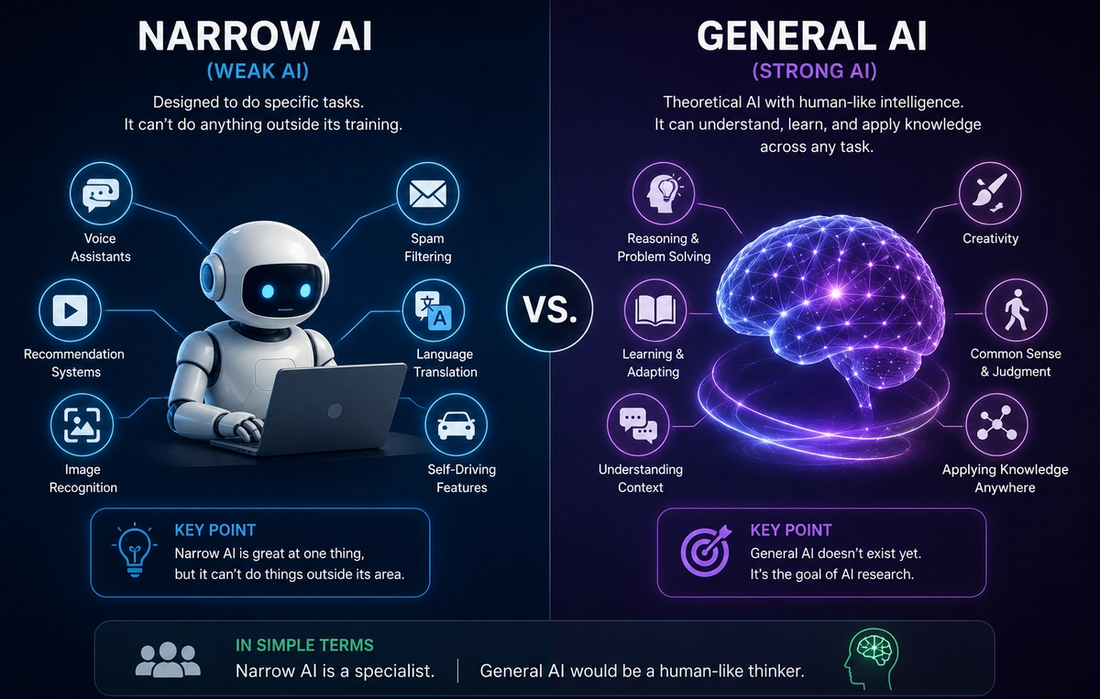
Machine learning is one of those tech terms people hear constantly but rarely fully understand. It shows up in conversations about artificial intelligence, social media algorithms, self-driving cars, online shopping, and even music recommendations.
The phrase itself sounds complicated, almost intimidating. But the core idea behind machine learning is actually much simpler than most people expect.
At its heart, machine learning is about teaching computers to recognize patterns from data so they can make predictions or decisions without being manually programmed for every situation.
It is less like magic and more like practice.
Key Takeaways
- Machine learning helps computers recognize patterns from data
- Instead of following fixed instructions, systems improve through experience
- Recommendations, spam filters, and image recognition all rely on machine learning
- Data is the foundation of how machine learning systems improve
- Most machine learning is based on prediction, not true understanding
Computers Traditionally Follow Exact Instructions
For most of computing history, software worked through strict rules written directly by programmers.
For example:
- If the password is wrong, deny access
- If the temperature reaches a certain level, turn on the fan
- If the player presses a button, make the character jump
Everything followed clear instructions.
Machine learning changed that approach.
Instead of telling a computer every possible rule manually, developers feed systems large amounts of data and allow the machine to learn patterns on its own.
In simple terms, the computer learns through examples.
It Works a Lot Like Human Practice
Imagine teaching a child to recognize dogs.
You would not explain every scientific detail about dogs. Instead, you would show many examples:
- Small dogs
- Large dogs
- Different colors and breeds
Eventually, the child starts recognizing dogs independently because their brain notices patterns.
Machine learning works similarly.
An AI image system trained on thousands of dog photos begins identifying patterns like shapes, ears, fur, and facial structures. Over time, it becomes better at recognizing what a dog looks like.
The more quality examples it sees, the better it usually performs.
Data Is Everything
Machine learning systems depend heavily on data.
The system studies enormous amounts of information looking for patterns, relationships, and repeated behaviors. That data may include:
- Photos
- Text
- Videos
- Purchases
- Search history
- Driving behavior
- Voice recordings
For example, Netflix studies viewing habits to predict what people may want to watch next. Spotify analyzes listening behavior to recommend music. Email systems learn how to recognize spam messages.
Without data, machine learning cannot improve.
This is why large tech companies place enormous value on user information — data fuels modern AI systems.
Machine Learning Is Mostly About Prediction
One important thing people misunderstand is that machine learning does not “think” like humans.
Most systems simply predict outcomes based on patterns they have seen before.
For example:
- Autocorrect predicts what word you intended to type
- YouTube predicts which video you may click next
- Online stores predict products you may want to buy
- Navigation apps predict traffic conditions
The system does not truly understand meaning the way humans do. It calculates probabilities based on training data.
That is why machine learning can sometimes appear incredibly smart while still making surprisingly strange mistakes.
There Are Different Types of Machine Learning
Not all machine learning works the same way.
One common approach is supervised learning, where systems train using labeled examples. For instance, an AI might study thousands of images already labeled “cat” or “dog.”
Another approach is unsupervised learning, where systems search for patterns without labels, grouping similar information together on their own.
There is also reinforcement learning, where systems improve through trial and error. This method is often used in robotics and game-playing AI.
Different methods work better for different problems.
Why Machine Learning Became So Powerful Recently
Machine learning itself is not brand new. Researchers have explored the concept for decades.
What changed recently is:
- Faster computers
- Massive amounts of internet data
- Better algorithms
- More powerful graphics processors
Modern systems can now process enormous datasets much faster than older computers ever could.
This allowed machine learning to move from research labs into everyday products people use constantly.
In many ways, the explosion of AI tools today is the result of years of technological progress finally reaching practical scale.
Machine Learning Is Already Everywhere
Most people use machine learning daily without noticing it.
It powers:
- Search engines
- Recommendation systems
- Voice assistants
- Fraud detection
- Translation tools
- Social media feeds
- Smartphone cameras
Even simple conveniences like face unlock on phones or predictive typing rely heavily on machine learning models.
The technology feels invisible because it has become deeply integrated into modern digital life.
Machines Learn Differently Than Humans
Despite the name, machine learning is still very different from human learning.
Humans understand context, emotions, reasoning, and real-world experiences naturally. Machines mainly recognize statistical patterns.
A machine learning system can identify millions of cats in photos without ever truly understanding what a cat actually is.
That distinction matters because people sometimes overestimate what AI can currently do.
Machine learning can be extremely useful, but it is still fundamentally a tool designed around pattern recognition and prediction.
The Technology Will Keep Expanding
Machine learning is likely to become even more common in the coming years.
Healthcare, transportation, education, entertainment, finance, and science are all rapidly adopting AI-driven systems.
At the same time, concerns around privacy, misinformation, bias, and automation continue growing as machine learning becomes more powerful.
The technology itself is neither inherently good nor bad. Its impact largely depends on how humans choose to use it.
What is certain is that machine learning is no longer some distant futuristic concept. It is already shaping everyday life quietly in the background — one prediction at a time.