
5 Video Games That Caused Real-World Controversy

By Kate Willis on May 18, 2026
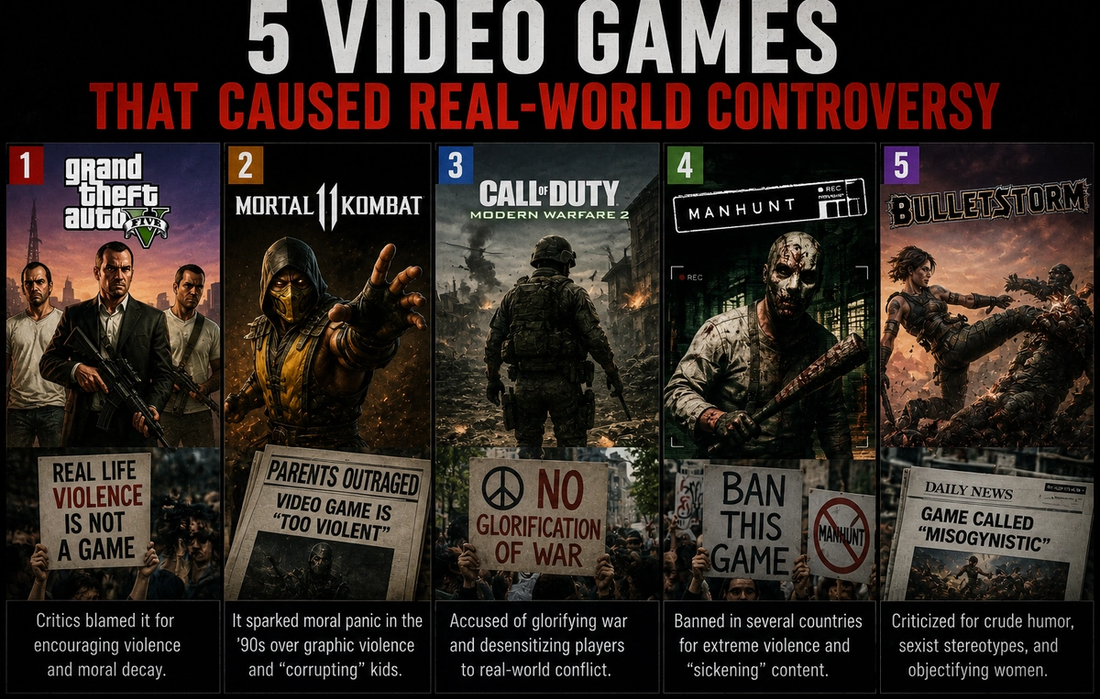
Video games have always sparked debate.
As gaming became more popular and culturally influential, certain titles started triggering outrage far beyond the gaming community itself. Politicians, news outlets, parents, and advocacy groups often blamed games for violence, addiction, moral decline, or social problems.
Some controversies were exaggerated. Others raised legitimate ethical questions.
But regardless of whether the criticism was fair, certain games became cultural flashpoints that shaped public conversations about entertainment, technology, and media influence.
Key Takeaways
- Several major games sparked political and cultural backlash
- Violence, censorship, and morality often fueled controversy
- Some controversial games eventually became hugely influential
- Public fear around gaming changed over time
- Controversy sometimes helped games become even more popular
1. Mortal Kombat
Few games shocked the early 1990s like Mortal Kombat.
At a time when most video games still looked relatively cartoonish, Mortal Kombat introduced digitized characters and brutal finishing moves called “Fatalities.” Players could rip out spines, decapitate opponents, and perform graphic attacks that seemed extreme for the era.
Parents and politicians reacted immediately.
The backlash became so intense that U.S. Senate hearings were held about violent video games, helping lead to the creation of the ESRB age rating system still used today.
Ironically, the controversy made the game even more famous.
2. Grand Theft Auto
The Grand Theft Auto series became one of the most controversial franchises in gaming history.
The games allowed players to steal cars, commit crimes, attack civilians, and explore open worlds with unprecedented freedom. Critics argued the series glorified violence and criminal behavior.
News channels regularly blamed GTA for social problems, especially after high-profile incidents involving young players.
Yet supporters argued the games were satire — exaggerated reflections of crime, media culture, and modern society rather than endorsements of violence.
Despite decades of controversy, Grand Theft Auto became one of the best-selling entertainment franchises ever created.
3. Pokémon
Compared to violent games, Pokémon seems harmless now. But during the late 1990s, it sparked massive moral panic in several countries.
Some religious groups claimed the franchise promoted:
- gambling
- occult symbolism
- dangerous obsession
At the same time, schools often banned Pokémon cards because playground trading caused constant arguments, thefts, and distractions.
One infamous anime episode in Japan even caused hundreds of children to experience seizures due to flashing visual effects, leading to national concern around the franchise temporarily.
Today, the panic feels exaggerated, but it revealed how quickly adults became suspicious of rapidly growing gaming phenomena.
4. Doom
When Doom launched in 1993, it revolutionized first-person shooters completely.
Fast-paced gameplay, demons, guns, and online multiplayer made it hugely influential — and hugely controversial.
The game became one of the earliest major targets in debates around video game violence. Critics worried its realistic perspective and violent action could negatively affect players psychologically.
After the Columbine school shooting in 1999, media attention around violent games intensified dramatically because reports revealed the attackers played Doom.
The debate over whether games influence violent behavior continues even today.
5. Hatred
Released in 2015, Hatred generated controversy almost entirely because of its disturbing premise.
Unlike most action games, which usually frame violence around heroes or missions, Hatred focused purely on mass violence and destruction. The game’s dark tone and marketing immediately triggered backlash online.
Critics accused it of existing solely for shock value.
The controversy became so intense that the game was temporarily removed from Steam before eventually returning to the platform.
While the game itself never became especially successful, it reignited larger debates around censorship, artistic freedom, and the limits of interactive media.
Video Games Became Cultural Scapegoats
One reason gaming controversies happen repeatedly is because new forms of media often become targets of public fear.
In previous generations, people blamed:
- comic books
- rock music
- television
- movies
- the internet
Video games eventually became the newest cultural scapegoat because they felt interactive and unfamiliar to older audiences.
When society struggles to understand rapidly changing technology, fear often follows.
Controversy Often Made Games More Popular
Ironically, controversy frequently helped these games succeed.
Public outrage created media attention, curiosity, and cultural relevance. Many players became even more interested precisely because adults claimed the games were dangerous or inappropriate.
For younger audiences especially, controversial games often felt rebellious and exciting.
In some cases, moral panic unintentionally became free marketing.
Gaming Is Now Too Big to Ignore
Today, video games are one of the largest entertainment industries in the world.
Gaming culture influences:
- music
- movies
- internet culture
- sports
- storytelling
- social interaction
Because games became so culturally important, controversies surrounding them now reflect much larger societal debates about:
- violence
- censorship
- technology
- addiction
- freedom of expression
Video games stopped being niche hobbies long ago.
The Debate Around Games Will Probably Never Fully End
As technology evolves, new controversies continue emerging around:
- virtual reality
- AI-generated content
- loot boxes
- online toxicity
- gaming addiction
Every generation tends to worry about the newest form of entertainment shaping younger audiences.
But history repeatedly shows something important: people often fear new media long before fully understanding it.
And few forms of media sparked that fear quite as consistently — or as dramatically — as video games.